StoneTree Farm

StoneTree Farm
StoneTree Farm

Monday, 25 November 2013

Shearing Season


It is shearing season once again and I thought you might like a quick view of our miracle lamb. She's the one in the center facing us. Remember, she was born during the last shearing and everyone thought she would die. Obviously she didn't. I feel a special affinity for her and love to see her hopping and leaping in the paddock (running away from me as fast as she can just like all the others).

The rest of the family was back in Auckland so it was up to me to "supervise". This always elicits a few chuckles from family and friends. John is more than capable of doing the whole operation on his own. In fact, this time he almost had to. He didn't call me went he got to the shearing shed so I had no idea he had started.

On a vague whim, I drove down to check on how the sheep were doing since they were cooped up waiting. John was there and so were 4 sheep already shorn. I told you he was more than capable. Anyway, my heart stopped as I saw one ewe with blood trickling down the side of her face (see picture). I stuttered as I asked John if that was something I should be concerned about. "Nope," he answered, "Sheep heal quicker than about any other animal."


Maybe so, but she bled the whole 3 hours. Not only that, by the time John finished, the place looked like an abbatoir. You can see how closely they are confined. As she moved around, she wiped her blood all over the pretty shorn coats of the rest of them. Not a pretty sight. I was just glad the girls weren't here. I have no idea how I would have put a happy spin on that one.

I checked on the flock this morning and the overnight rains have washed the fleeces and I can't even figure out which ewe got nicked on the ear. I guess they are quick healers. Lucky for them!

Sunday, 17 November 2013

Market Garden Update


It has been a few weeks now since my last blog on the market garden (MG) so here is an update. A few weeks can be a lifetime in the Spring garden and I wish I could say that was the case for the MG. But it’s not.

The bugs continue to win what I now consider to be a very unequal contest. As you can see, the tomato plants in the foreground are struggling to survive. Only one bean plant (in the back of the tomatoes) is growing and that is a replacement for its 9 dead relatives.
 

I have scattered tomato plants throughout the garden and most of them are still alive which I guess means the battle is still being waged. But they are obviously in some distress. I water every day which is a worry since it is very early in the season to be using so much water. I read somewhere that beneficial bugs live under soggy logs so I have started importing some. We’ll see.

The only area in which I can claim success is as a possum burial site. Dan and I inter our possum kills right in the soil. Dan thoughtfully makes sure that the tails are left exposed (that is what you can see directly below the corner of the white board). This is so that when I plant seeds or seedlings, I don’t inadvertently dig into a carcass.
 

There are so many things I never dreamt I’d be doing. Burying possums; catching snails and using them for chicken protein; cleaning out barns and chicken coops; hauling water, etc. etc. I look back on the Suburban Terry with some astonishment. Did I really expect to go through life never being in touch with the reality of food production? I guess so. I honestly never thought about it. This adventure has truly changed my life. I hope I am more humble. Losing the ongoing battles to a bunch of insects surely is humbling enough to do it for me.

Wednesday, 6 November 2013

How Did They Do It?


Now that I am struggling with the organic garden concept, I look back on our evolutionary progress (?) with great puzzlement. How did they do it? I can’t get a lousy 9 bean plants to survive in the natural environment. How on earth (pun intended) did our ancestors move from hunter/gatherers to farmers and survive?

I am not saying that I share my beans and peas with the earth and all its critters and insects. I am saying that I am ceding my beans and peas to them. Look at the picture. Where do you see 4 and ½ plants surviving to feed me and my family? Nowhere! The critters and insects have demolished the whole crop and have moved in on the peas. How did those ancestors manage to grow enough for them to survive?

I am still faithfully (and it takes a whole lot of faith let me tell you) planting my cherished seedlings in the market garden. They are protected by wood plank walls and bird netting and still they are nothing more than a portable feast for whatever.

I am also planting seeds directly in the soil. The soil, by the way, which is overrun with weeds.  Remember all the paper we smoothed out and then laid out?  How about the top soil, compost, and mulch? Remember them? My aching muscles do. Dan and Yael’s aching muscles also vividly remember. But the weeds were born without shame and continue to thrive in our organically correct market garden. I just pray that enough of our plants thrive to feed us this Autumn and Winter. But I’m not too optimistic.

Monday, 21 October 2013

Organic Hand Care


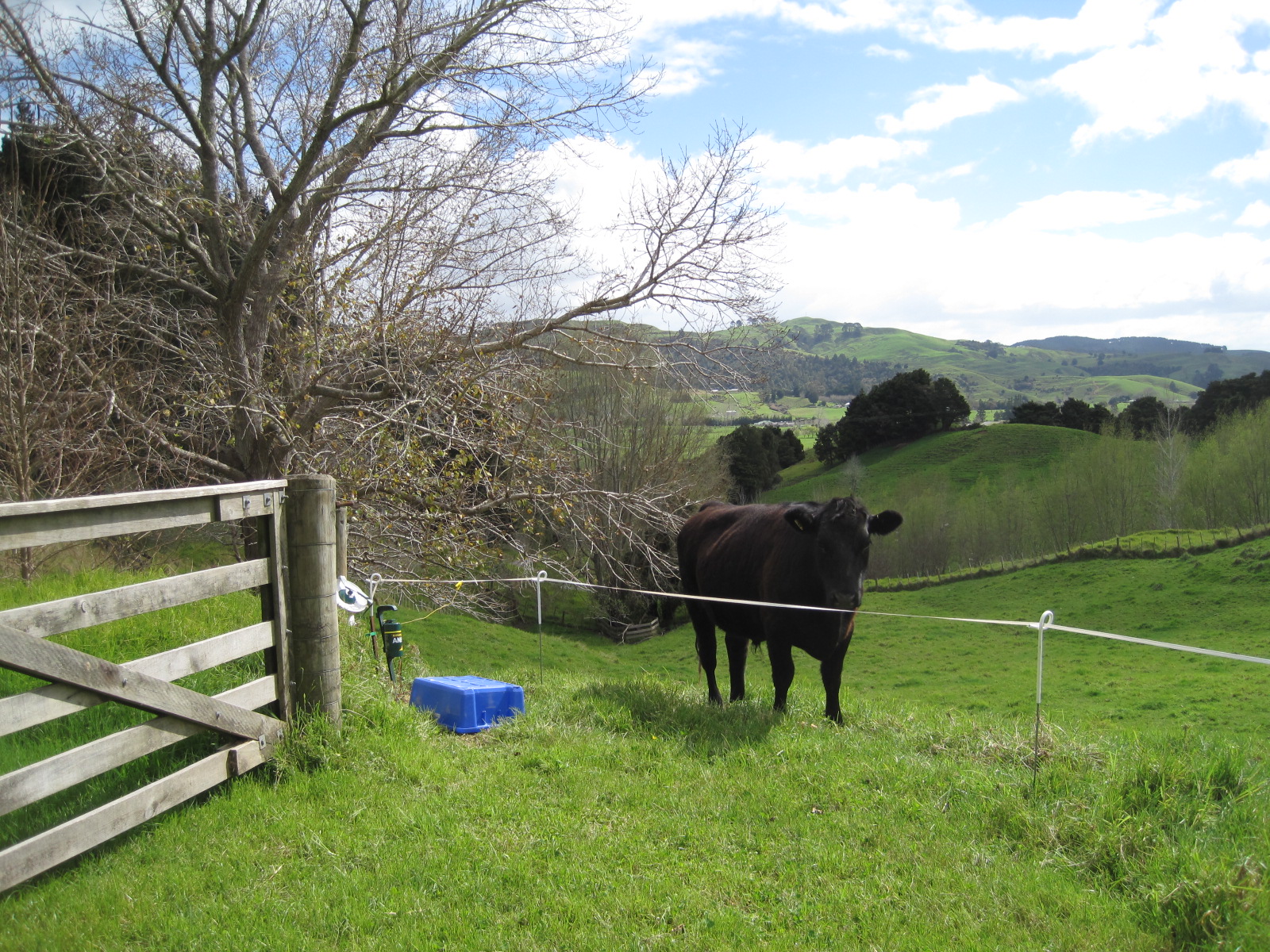
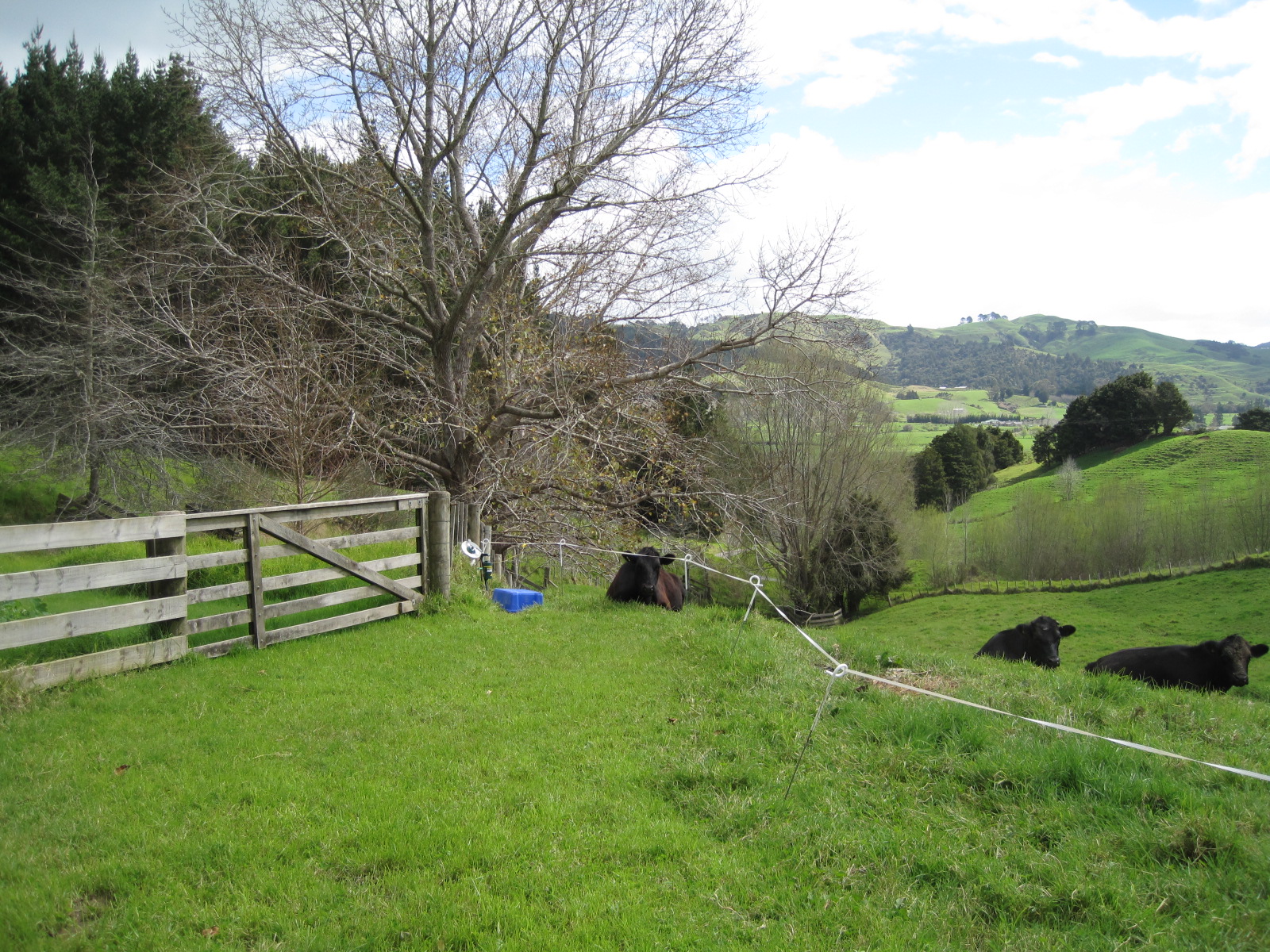
Before I give you my soon-to-be patented recipe for hand care, a little background is required. It is now Spring and the torrential rains have pretty much petered out. So in our never ending attempt to conserve grass, Dan has come up with a complex grazing system. This system includes polytaping (electrified fencing) off parts of the tree sanctuary in front of the house (see above photo). The blue box in the lower right covers the battery. 

But the important part of this picture is that round, blue container set in the paddock. It is filled with water. How do I know? Because I filled it just before I took that picture. The down side of this grass conservation system is that the water troughs are often not located where the fencing and cattle are. In comes the intrepid grandma, hose across shoulders, climbing the fence and dodging cow patties on her way to the trough. Still it's better than last week when the hose system failed and I had to haul buckets of water to both the steers and the sheep - twice a day!

That aside, it's time for the first part of my recipe: get splinters in your hands from the rough wood fencing.

The second ingredient comes from my love of flowers; in this case roses. I have planted 5 different rose bushes in containers around the house, wrapped them in chicken wire (possums also eat roses!), and walked out to see if there are any blooms at least twice a day. There aren't any blooms but there are aphids. Not my favorite pest but there they are.

I go to my handy gardening magazine and it tells me to spray with a fish emulsion mixture. I do that. My hands get liberally coated and stink to high heaven for days. I usually sleep with one hand under my pillow but until the mixture wears off, I find myself sleeping as far away from my hands as possible. Not an easy feat.

So fish emulsion is my second ingredient. The splinters have opened up wounds in my hands and wrists and the emulsion is able to penetrate beneath the skin. So far all is working well.

The third ingredient is the aphids themselves. Oh, didn't I mention that the fish emulsion had absolutely no effect on the aphids? So I moved on to Plan B which involves manually crushing the aphids and squooshing them off the buds and leaves. This puts the squashed aphids on my hands. The aphids then enter beneath the skin by sliding in on the fish emulsion.


Dan and Yael have now screened off the whole market garden. It is quite an accomplishment. I am able to walk around in there standing upright. And it is big, really, really big. After an incredible amount of discussion, we decided to locate the garden there in the middle of our fruit orchard. Any number of reasons but there is water nearby, it is flat, it is not taking a grazing paddock out of circulation. An excellent decision but there is one drawback (of course).

The drawback is snails. They are all over the paddock, the grass, and the trees. So the girls and I go out to catch snails. And (this was my idea, I'm thinking of writing it up for some agricultural journal) we take the snails back to the chickens for their weekly protein. Everybody wins! Well, maybe not the snails.

So the girls and I go out and we average about 40 snails a trip. Not bad? Ha! I read this reminiscence from a woman who tells of being hauled out of bed by her father so that they can go snail hunting at night. It seems the little slimeballs are nocturnal. I hadn't known that. So the next morning I go down right after feeding the chickens. The girls are back in Auckland and I bag 412 snails. I'm not kidding: 412. My chickens have erected some kind of golden idol to me and genuflect when I pass. I have not reached that height again but I average way past the old record of 40 snails.

And that brings me to the final incredient. Remember, we have the open splinter wounds, the fish emulsion and the aphids. Now we have snail slime. This coats the hands and keeps them moist. So what do you think? Any takers for investing in my hand lotion company? Well, let me know.

Tuesday, 8 October 2013

Chickens Are Not Cheap

Chicken feed is even more expensive than cat food. Wood shavings are pretty darn pricey too. My cat uses the great outdoors so I don't have the kitty litter bill to compare but all in all, chickens are not cheap.

They are also expensive in terms of time and emotional energy. We'll take the time element first. In order for them to get the maximum daylight they require for optimal egg laying, I have to let them out of the coop at sunrise and return them at dusk. So what's the problem? The problem is that I occasionally (like always) prefer to stay in bed past 5:45am and as dusk falls I prefer eating chicken to chasing chickens.

As twilight creeps over the mountain, here I am darting to and fro chasing our feathered friends. I am convinced that chickens are really very bright and I read an article recently that confirmed it. In some areas chickens out think human toddlers! It's for sure that all 6 of my chickens can outthink me. They can also outrun me.

For a few days I thought I had trained them to come into the coop at dusk as I poured that dearer than gold chicken feed into the feeder. Then just as I was congratulating myself, 3 showed up and 3 were AWOL. I spent about a half an hour searching in the gathering gloom before they magically appeared at my feet. I still have no idea how they do that, but it is becoming a regular thing now.

Emotionally they are very taxing. They seem happy enough but they won't leave me alone for a second. I can't weed the garden because they hop up onto the beds and peck away right next to my trowel. I can't walk with my granddaughters because both of the girls are needlessly terrified of the chickens and Naavah's screams could pierce the clouds. Alessia runs for the fence, bolts over and dodges into the garage. I don't have to do anything to protect the kids since the chickens are totally uninterested in any human being but me. They walk with me weaving dangerously around my feet and chatter constantly.

And that brings me to another thing, my 8 month old grandson has perfected the chicken squawk and I am constantly whirling around thinking that one of the hens has gotten into the house. Why not? They get into everything else. Frankly it has been a nightmare. There is chicken poop everywhere. The gardens are a hen scratched mess and I back out of the garage at 1/2 mile an hour because they KNOW I'm in there somewhere and are determined to flush me out.

So far the fences and the gate have not been enough to confine them so on Sunday we pulled out all the stops. We clipped the wings of every last one of them. Now perhaps I'll get some peace.

Monday, 23 September 2013

Frustration Continued


I promised you the rest of the story. Here it is. While I was madly winding polytape and shooing steers, I was also chasing chickens. This was not new. I was spending about 2 hours a day crouched down waving my arms as I herded the flock back from the forbidden zones.

The problem was that there were way too many of these zones. I had to keep them out of the steers' paddock for fear they would electrocute themselves. I had to keep them out of the farm buildings for the damage they would do. And, most importantly, I had to keep them out of our gardens and the raised beds. To that end, I carefully squeezed myself through the gates to keep them contained in the chicken area.

You can see from the above  picture how well that worked out. They just flapped their (supposedly clipped) wings and hopped over. Now I was forced to keep the garage doors closed so they wouldn't join me for tea in my apartment. Since I provide the chicken feed twice a day, I am Queen of the Hill. They follow me everywhere! I can't move without them. And they're smart. By the time I have raised the garage door, they are lined up there waiting for handouts. So while I am frantically trying to contain the steers, I also have to contend with the chickens.

But that's not all, folks. We now come to the sheep. All 30 sheep were supposed to be getting to know each other in paddock #3. So imagine my excitement when I glance up the hill at #4 and there they are. Thrilled does not begin to cover it.
About 10 of them are strolling happily through #4. This is one of the paddocks which is 'resting'. Dan has an intricate system of grass rotation that kept our stock happy and well-fed even through the worst drought in 50 years. He plans to continue that success this year. But not  if we have errant sheep wandering around.

So in my spare time I hike over and shoo the sheep back into #3. I can't find any gaps in the fencing so I figure one of the neighbor's kids forgot to latch a gate and then latched it on a return trip. I was wrong. Several hours later, the sheep are back again. Only 4 this time but in a way that makes it harder to herd them. A flock with large numbers tends to stay together and a few scattered ones will just run all over the place.

But my big problem is to figure out how they are getting in. It takes a while but I manage to get all 4 of the Suffolk sheep back to #3. Then it dawns on me: the sheep were shorn last Sunday! Aha. Move over Mr. Holmes. Shorn sheep are much smaller than woolly ones. The little suckers were scooting under the gate.

While I am gathering wood to barricade the gate, some of the sheep reappear. This time I herd them while dragging a fair sized log. Strange to say, I manage this feat. Now my solution might not be elegant, but it worked.

Tuesday, 17 September 2013

Frustration


Today was the first day since I got here that I seriously thought of ditching the farming dream and finding something easier to do, such as ditch digging or Formula One racing.

It all started with my final stock check the evening before. Chickens were safely in the coop (after a spirited half hour around the paddock chasing them). The sheep were all gathered safely in their favourite paddock, #3. And the steers, I thought, were bedded down in the new barn paddock. I was half right. They were bedded down, but in the barn itself, not in the grassy paddock.

My dilemma was what to do. They were lots bigger than I, it was almost dark, and the polytape (portable electrified fencing) was down and dragged through the paddock. So I called Dan. The result was that I found a working flashlight (a success in itself) and went out to repair the tape.

But first I had to get the steers out of that nice, warm, dry, hay-filled barn and into the cold, damp paddock. I did it. I won’t tell you how in case some animal activist reads this and reports me. But they left. Unfortunately for me, they like me and wanted to hang around and be chums. So I was constantly shooing them back so they wouldn’t tramp on the tape as I wove my way around the paddock, rewinding the tape; the flashlight in my mouth. My teeth still hurt.

Finally I get the tape reset, unhook the battery, then clamp the yellow lead, re-hook the battery, listen to hear that the gismo is working. I hear nothing but my sinuses are so stopped up I couldn’t hear Pavarotti if he were still around to belt out an aria.

I wake up the next morning in the blissful belief that I solved a major problem last night and that things can now return to normal. Just shows how wrong one person can be.

The polytape is down again. The cows have decimated the hay in the barn and the entire floor is covered with cow dung. This time I can’t even find the yellow lead that electrifies the tape. I shoo out the steers. I am getting quite good at this. Then I start winding up the polytape to keep it out of the muck and mud. I figure I have 2 options. I can try to move the steers to another paddock by myself or I can let them destroy the barn. I’m not particularly thrilled with either option.

But somehow they have managed to pull apart the fencing gismo and there is no way to prevent them getting back into the barn. So I mull over my options as I rewind the tape yet again. And then my miracle happens. As I am about a third of the way through winding, the yellow lead comes up wrapped around the tape.

So I threaten the boys with bodily harm, or grilled steak, and chase them across the entire paddock so I have time to rethread, re-hook and reattach everything. I must have finally done it right because ever since they just sit and look at the gismo, but they don’t touch.

In my next blog, I’ll tell you what else happened to me on my day of frustration. Right now I am just too whipped to write any more. Til next time!